
Follow Us:

Key Features of Efficient Warehouses for Logistics and Manufacturing

Introduction

As logistics and manufacturing industries continue to evolve in Kenya, the role of warehousing has become more important than ever. Businesses are no longer simply looking for storage space. They are looking for facilities that improve efficiency, reduce operational costs, and support long term growth.

An efficient warehouse can directly impact productivity, delivery timelines, inventory management, and overall business performance.

So what exactly makes a warehouse efficient for logistics and manufacturing operations?

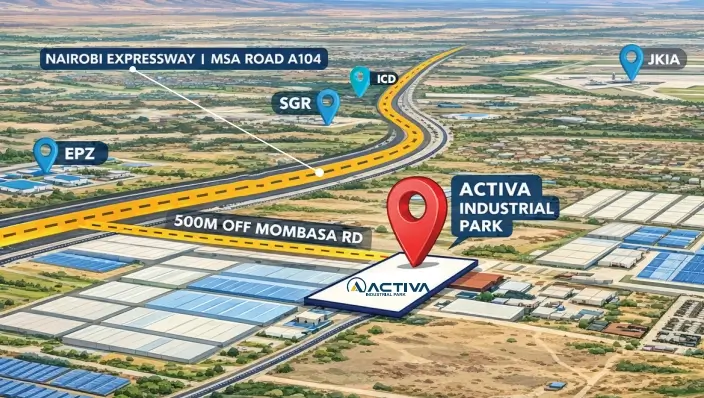
Strategic Location and Connectivity

A warehouse positioned near key transport infrastructure helps businesses reduce transit time, fuel costs, and delivery delays.

Important infrastructure includes:

  • Major highways
  • Inland Container Depots (ICDs)
  • Standard Gauge Railway (SGR) terminals
  • Airports such as JKIA

Efficient Truck Access and Movement

Efficient warehouses should include:

  • Wide internal roads
  • Dedicated loading zones
  • Adequate turning space
  • Smooth entry and exit flow

These features improve turnaround time and reduce congestion.

High Clear Heights for Better Storage Capacity

Modern warehouses maximize vertical space through higher clear heights, improving storage efficiency and flexibility.

Smart Warehouse Layouts

Efficient layouts reduce unnecessary movement and improve productivity.

Important considerations include:

  • Logical operational flow
  • Wide column spacing
  • Efficient loading dock positioning

Reliable Utilities and Infrastructure

Efficient warehouses should provide:

  • Reliable power supply
  • Water systems
  • Internet connectivity
  • Fire safety systems

Sustainability and Energy Efficiency

Modern warehouses increasingly include:

  • Hybrid solar power
  • Energy efficient lighting
  • Water recycling systems
  • Low flow fixtures

These features reduce operating costs and support sustainability goals.

Security and Operational Safety

Businesses should look for:

  • CCTV surveillance
  • Controlled access points
  • Perimeter security
  • Well lit operational areas

Scalability and Flexibility

Warehouses should support future growth through:

  • Flexible layouts
  • Expandable space
  • Multiple unit size options

Accessibility to Labour and Industrial Ecosystems

Locations with access to labour, suppliers, logistics providers, and industrial support services create stronger operational ecosystems.

What This Means for Logistics and Manufacturing Businesses

Efficient warehouses improve operations through:

  • Lower costs
  • Faster turnaround times
  • Better inventory management
  • Long term scalability

Evaluating Warehouse Space More Strategically

Businesses should evaluate warehouse efficiency, infrastructure, and operational value rather than focusing only on rent.

Explore Modern Warehouse Solutions

Businesses exploring warehouse space around Nairobi and Athi River should consider developments designed for modern operational needs.

Role Purpose

The Sales & Marketing Executive – Real Estate supports business growth by executing targeted marketing initiatives that generate qualified leads and directly support sales activities for industrial and commercial mixed-use developments.

The role works closely with the sales team to drive effective project marketing, client engagement, and on-ground sales support.


Qualifications & Experience
  • Bachelor’s degree in Marketing, Business, Real Estate, Communications, or a related field.

  • 1–2 years’ experience in real estate marketing, sales support, or a related role.

  • Experience marketing industrial, commercial, or mixed-use developments is a strong advantage.

  • Proven experience in lead generation, campaign execution, and supporting sales teams.

  • Experience working with both internal sales teams and external marketing agencies.


Key Skills & Competencies
  • Strong understanding of real estate marketing and sales cycles.

  • Hands-on digital marketing and campaign execution skills.

  • Excellent written and verbal communication abilities.

  • Strong coordination, organization, and stakeholder management skills.

  • Commercial awareness with a data-driven approach to decision-making.

  • Ability to work independently and manage multiple campaigns concurrently.

  • Proficiency in CRM systems and marketing analytics tools.


Key Responsibilities
1. Marketing Campaign Planning & Execution
  • In liaison with the sales team, plan, develop, and execute integrated marketing campaigns (digital, on-ground, B2B, and property-led) to drive lead generation and enhance brand visibility for real estate projects.

2. Lead Generation & Funnel Management
  • Generate, qualify, track, and assign leads from all marketing channels.

  • Ensure timely follow-up and smooth handover of qualified leads to the sales team.

3. Sales Support & Enablement
  • Support the sales team by developing pitch decks, brochures, proposals, site presentation materials, and other sales collateral aligned with client needs and project positioning.

4. Content Development & Messaging
  • Create and coordinate marketing content including project descriptions, email campaigns, social media content, advertisements, case studies, and promotional materials targeting real estate buyers, tenants, and investors.

5. Agency Coordination (As Required)
  • Act as the day-to-day liaison with external marketing agencies, ensuring clear briefs, timely delivery of outputs, alignment with project objectives, and adherence to approved budgets.

6. On-Ground Marketing & Site Activations
  • Support and participate in site-based marketing initiatives such as project launches, site visits, open days, exhibitions, investor forums, stakeholder engagements, and client presentations.

7. Market Research & Competitive Analysis
  • Conduct market research and intelligence on industrial and commercial real estate trends, competitor developments, pricing benchmarks, and buyer or tenant preferences.

8. CRM Management & Reporting
  • Maintain accurate and up-to-date records of leads, campaigns, and client interactions within the CRM system.

  • Prepare regular marketing and sales support reports and insights for management review.

9. Brand & Project Positioning
  • Ensure all marketing and sales materials consistently reflect the company’s brand guidelines, project positioning, and value propositions, particularly for industrial and mixed-use developments.

10. Budget & Performance Monitoring
  • Track campaign budgets, measure return on investment (ROI), analyze performance metrics, and optimize marketing initiatives based on conversion rates and sales outcomes.

Role Budget: 30k PM Max
Role Purpose

The Project Assistant – Sales & Site Coordination provides hands-on support at the project site, bridging the gap between construction activities and commercial sales objectives.

The role supports on-site sales activities, client engagement, and stakeholder coordination while proactively identifying site-related issues that may impact project timelines, delivery, or commercial outcomes for industrial developments.


Qualifications & Experience
  • Diploma or Bachelor’s degree in Real Estate, Construction Management, Architecture, Quantity Surveying, Engineering, or a related field.

  • 1–2 years’ experience in real estate development, construction projects, or industrial/commercial property environments.

  • Direct exposure to industrial parks, warehouses, or logistics facilities is a strong advantage.

  • Practical understanding of construction processes, site coordination, and real estate sales cycles.


Key Skills & Competencies
  • Strong on-site coordination and communication skills.

  • Ability to engage confidently with clients, consultants, contractors, and internal teams.

  • Commercial awareness with a sales-support mindset.

  • Ability to identify site risks and translate technical issues into actionable insights.

  • Highly organized, proactive, and detail-oriented.

  • Comfortable working in a fast-paced, live construction environment.


Key Responsibilities
1. On-Site Sales Support
  • Support sales activities at the project site, including site tours, unit showings, responding to client enquiries, and assisting with follow-ups for industrial units.

  • Ensure prospective buyers and tenants receive accurate and up-to-date site and project information.

2. Client Engagement & Relationship Management
  • Act as the primary on-site contact for prospective and existing clients during site visits, inspections, and meetings.

  • Ensure professional engagement, timely responses, and smooth coordination throughout the client interaction process.

3. Stakeholder Coordination
  • Coordinate between the developer, project manager, main contractor, consultants, and sales and marketing teams to ensure alignment on site access, schedules, and communications.

  • Facilitate effective information flow between technical and commercial teams.

4. Site Progress Monitoring
  • Monitor day-to-day site activities and construction progress.

  • Identify and flag potential delays, access constraints, or construction issues that may affect sales commitments or handover timelines.

5. Developer Advisory on Site Issues
  • Identify site-related risks and opportunities, including design considerations, access routes, utilities, logistics flow, and compliance matters.

  • Provide practical feedback and recommendations to the developer and project team to support informed decision-making.

6. Sales & Technical Information Support
  • Assist in preparing, updating, and sharing sales-related documentation such as layouts, specifications, progress updates, pricing inputs, and technical clarifications.

  • Support the sales team by translating technical site information into clear, client-friendly insights.

7. Client Feedback & Market Intelligence
  • Capture client feedback during site interactions and relay insights to the sales and development teams.

  • Support refinement of product positioning, pricing, and sales strategies based on market feedback.

8. Coordination of Approvals & Site Access
  • Support coordination of site access, inspections, and approvals for clients, consultants, and other stakeholders.

  • Ensure all parties are aligned on timelines, site rules, and access requirements.

9. Reporting & Documentation
  • Maintain accurate records of site visits, client engagements, issues raised, and actions taken.

  • Prepare regular site and sales support updates and reports for management review.

10. Compliance, Safety & Professional Conduct
  • Ensure all site interactions comply with health and safety standards, site protocols, and regulatory requirements.

  • Maintain a professional and positive brand presence for the developer at all times.

Role Budget: 30k PM Max

Position Purpose

The Business Development and Operations Manager is responsible for driving company growth while ensuring efficient, compliant, and high-performing business operations.

The role combines strategic business development, market expansion, contract acquisition, and partnership management with oversight of internal operations, financial management, compliance, and continuous improvement.

The position works closely with the CEO and executive team to align growth initiatives with operational execution and long-term strategic objectives.


Education & Experience
  • Master’s degree in any business-related course.

  • Minimum of 8–10 years overall experience in business management, operations, and/or business development, with at least 5 years in a senior leadership or management role.

  • Minimum of 8 years’ relevant experience in business development, including bid preparation and proposal writing (mandatory).

  • At least 2 years’ experience in the renewable energy sector is an added advantage.

  • Strong background in operations management, forecasting models, budgeting, and financial data interpretation.

  • Experience working within a group of companies is an added advantage.

  • Proven experience with ERP systems, databases, project management software, and business process optimization.

  • Strong negotiation, stakeholder management, communication, and leadership skills.

  • High-level proficiency in computer applications and business analytics.


Key Responsibilities
1. Strategic Planning & Business Growth
  • Develop and execute integrated business development and operational strategies in collaboration with the CEO and management team.

  • Identify opportunities for business diversification, expansion, and investment.

  • Set departmental goals aligned with corporate objectives and monitor performance.

  • Drive innovation, best practices, and continuous improvement across the organization.

2. Business Development & Market Expansion
  • Identify, develop, and secure new business opportunities across public and private sectors.

  • Build and manage strategic partnerships with government institutions, private sector entities, academia, and financiers for EPC and C&I projects.

  • Conduct market research, feasibility studies, and business planning to support growth initiatives.

  • Represent the company at industry events to enhance visibility and strengthen networks.

3. Proposal, Bid & Contract Management
  • Lead the preparation and submission of bids, proposals, RFPs, and tenders, ensuring quality, compliance, and timeliness.

  • Conduct cost analysis, competitor pricing reviews, and bid optimization.

  • Develop marketing campaigns, lobbying efforts, and public relations strategies to support project acquisition.

  • Negotiate contracts in collaboration with legal and technical teams to secure favorable terms.

  • Oversee contract handover to Project Execution teams and ensure smooth transition and post-contract support.

4. Business Operations Management
  • Oversee day-to-day business operations to ensure efficiency, productivity, and quality.

  • Develop, implement, and enforce operational policies, procedures, and standards.

  • Streamline workflows and optimize supply chain processes, including inventory, sourcing, production, and sales.

  • Ensure alignment between operational execution and strategic objectives.

  • Collaborate with the Head of Finance to ensure the ERP system supports operational workflows, business reporting, and decision-making across departments.

5. Planning, Monitoring & Evaluation (PME)
  • Establish performance monitoring systems to track operational and project activities, outputs, and impact.

  • Develop and monitor KPIs to evaluate efficiency, effectiveness, and growth performance.

  • Conduct data-driven analysis to identify operational improvements and cost-saving opportunities.

  • Prepare and present PME and performance reports to management, clients, and stakeholders.

6. Financial & Budget Management
  • Oversee budgeting, financial planning, forecasting, and cost optimization.

  • Monitor expenditures, profitability, and resource allocation.

  • Support fundraising and financing efforts by maintaining relationships with project financiers and investors.

  • Manage financial risks and ensure compliance with applicable regulations.

7. Team Leadership & People Management
  • Lead, mentor, and motivate business development and operations teams.

  • Foster a culture of accountability, innovation, collaboration, and continuous improvement.

8. Compliance, Risk & Quality Management
  • Ensure compliance with local and international laws, regulations, and contractual obligations.

  • Oversee risk management, quality assurance, and health and safety standards.

  • Identify and mitigate operational, financial, and contractual risks.

9. Stakeholder & Client Relations
  • Manage relationships with clients, vendors, partners, regulators, and other key stakeholders.

  • Ensure high levels of customer satisfaction, retention, and service quality.

  • Lead conflict resolution and mediation efforts when required.

10. Reporting & Performance Improvement
  • Regularly report on business development, operational performance, and financial results.

  • Track key business metrics to assess the effectiveness of strategies and initiatives.

  • Drive organizational change and transformation initiatives as needed.


Reporting Line
  • Reports directly to: CEO